Posts

Why Does Invert and Multiply Work?

Image
In our class this week as we looked at the Grade 7 and 8 curriculum, we finished by looking at dividing by fractions, and more specifically at the question, Why does invert and multiply work? Why does this work? Well, first in order to see why it works I decided to look first what it means to divide regular numbers. Let's look at the example 6 ÷ 2. We know that this is equal to three, but let's look at how we can reason this out. One way to look at 6 ÷ 2 is to ask how many times does 2 go into 6. From this we can see 3 sets of 2 would equal 6 so the answer is 3. This is similar to asking what number multiplied by 2 gives us 6. Now let's go back to the example in the picture. If we rephrase this we can ask what multiplied by 1/6 is equal to 1/2. This is equivalent to the equation (1/6)x = 1/2 or x/6 = 1/2. Then we know that to solve for x we just multiply 1/2 by 6. However, in doing this what we have actually done is just invert and multiply. Another way to lo...

101 Questions

Image
In class we were introduced to an interesting site  101 Questions . On the site there are pictures which can be used in the math class to generate questions. The questions can relate to anything you see in the picture. Below we have an example of what one of those pictures may look like. From: http://www.101qs.com/3833-2nd-grade-number-talk From this picture we could ask some simple questions like, How many scissors are there? How many pens are there? How many blue objects are there? We could also relate this to our Data Management course by asking, what's the probability of randomly choosing a pencil? Or, what's the probability of choosing a yellow object and then choosing a red object? There are many more questions that could come from this picture but those are a few. I think such a task is very interesting to do as you are trying to look at the picture in as many different possible ways as possible. I think for students it also provides some variation in their usual...

Technology in the Classroom

Image
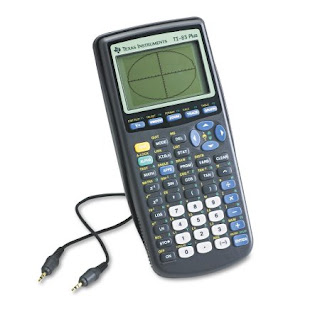
Technology is continually growing, encompassing larger parts of our lives, and that includes the classrooms that we teach in. This can be a great benefit in many ways as it helps to simplify our lives and increase efficiency and that includes teaching as well. For example, teachers can instead of spending time trying to create overheads for an overhead projector, can now just simply display what they wanted to directly with a Smart Board. It not only helps the efficiency of the teacher but of the students as well. Students have calculators in class which help them to quickly do calculations and to not waste time doing such work by hand. This helps them to focus on the content they are supposed to learn, allowing for them to more effectively learn the material. It is easy to see how technology can aid in the teaching and learning process, allowing for all involved to have the best experience. Having talked about how useful technology can be, I think it must also be mentioned the p...

Positive Norms to Encourage

Image
During our most previous class we went through "Positive Norms to Encourage in Math Class" by Jo Boaler. There were 7 norms she went through and for the most part I would agree with them and try to ensure that they are implemented within the classroom. For example one of the main ones that I agree with is that "Mistakes are Valuable". Too often I find that students are so focused on getting everything correct, that they are afraid to make any mistakes. As a result, if there is any doubt in their mind about something they will participate less in class, whether that's just asking the teacher a question, or volunteering to solve a problem. Not only that, they may not even be willing to try certain questions because they are afraid of getting it wrong. However, I would hope to ensure that students would not be afraid to make mistakes in class, because I agree that mistakes are helpful in learning. Mistakes allow students to show where they are not fully understan...

Open and Parallel Tasks

Image
During the most recent lesson we went through an interesting topic in Open and Parallel Tasks. I had never seen this before so it was a great introduction to another tool that can be used in the classroom. First, I found open tasks a very useful tool, as it is something that can be quickly and easily done in a classroom. All you need is a question, which is probably the most difficult thing to formulate, but once that's done it's up to the students to decide how they want to solve the problem. What I like in particular is that students aren't bound to work through it in a predetermined way, but since it's an open question they are able to have more freedom in how they think through  and process the question. However, despite this freedom, in the end there are still correct and incorrect answers so as the teacher you can still gain valuable assessment information through the task. I also think it's a good way for students to collaborate with each other after they w...

Manipulatives in Math

Image
In our class this week we went over various manipulatives that can be used within a classroom environment to further promote learning in different ways. I have had little experience with using the various manipulatives whether it was just simple blocks, or algebra tiles. As that was the case I was unsure of what to expect going into the activity as I wasn't too sure how effective it would be for students. Through the activity I was able to gain valuable experience in how I can use these tools within a classroom in the future. Some of the activities I found more insightful then others. For example, there was a question asking if you painted the outside of a 100x100 cube, how many of the cubes would be painted on two sides. In this case having a physical cube to work with made the question much more simple to answer as we could use smaller sized cubes such as a 3x3 cube in order to determine a pattern and then apply that to the 100x100 cube. If we weren't given the objects to ...

Reflecting On My Favourite And Least Favourite Math Courses

Image
Hello, For this next blog post I will be reflecting about an activity we did in class where we chose what our favourite class and least favourite class would be to teach, and we discussed it with those around us. At first I chose that my favourite class to teach would be one of the Grade 12 U level courses, because it's the most advanced level math and the students taking it would likely be “good” students as they are seeking to get into University. When it came time to choose our least favourite class, I instantly thought about the LD level courses since I assumed it would be low level Math, and that the students in it would not be interested or engaged. However, as we discussed why we thought it would be our least favourite I began to see a new perspective on the course. My initial reaction that I would not like the material began to change, as we began to discuss how the material in the course is meant to be very applicable to real life. Whether that's learning abo...